

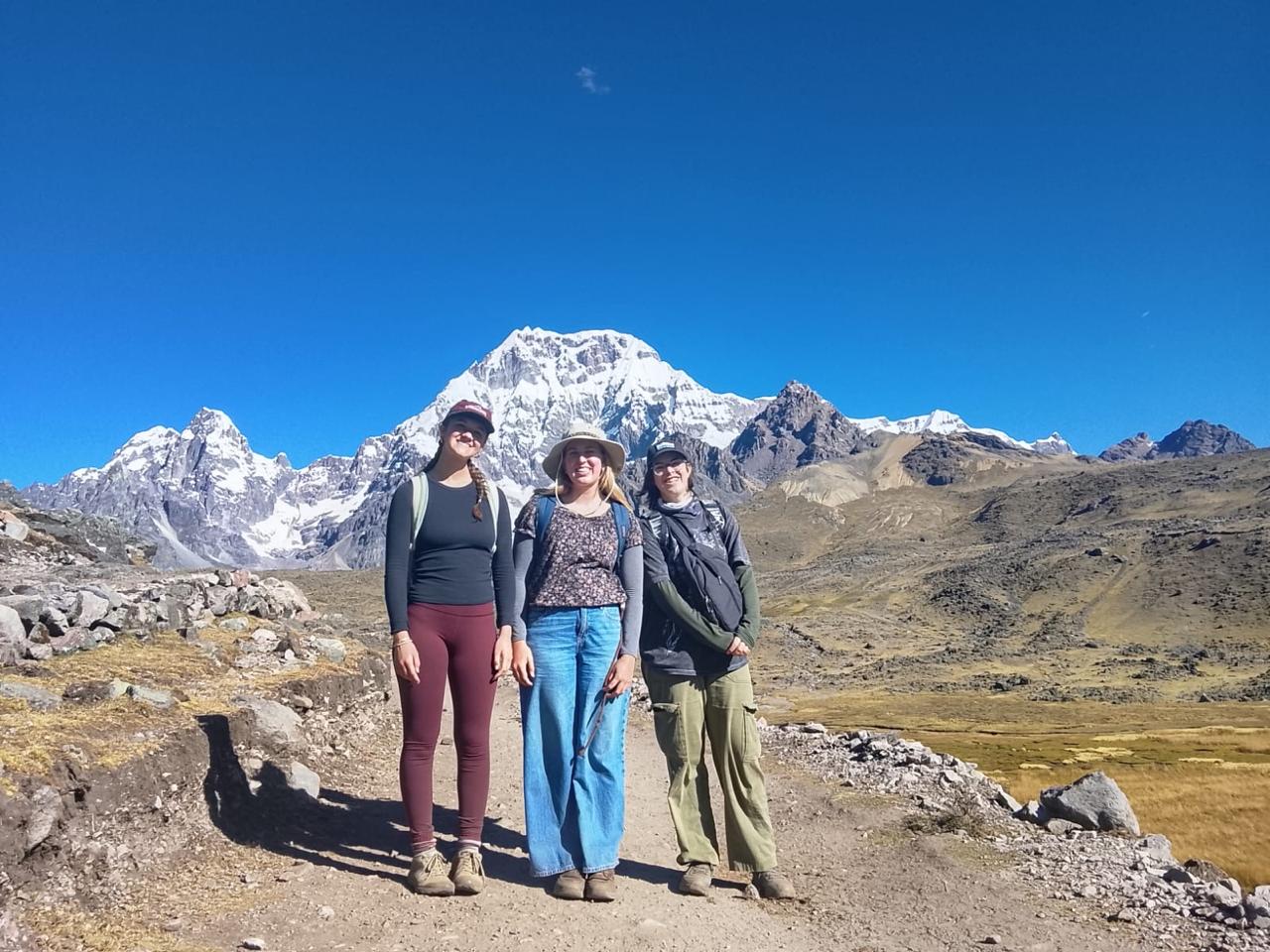
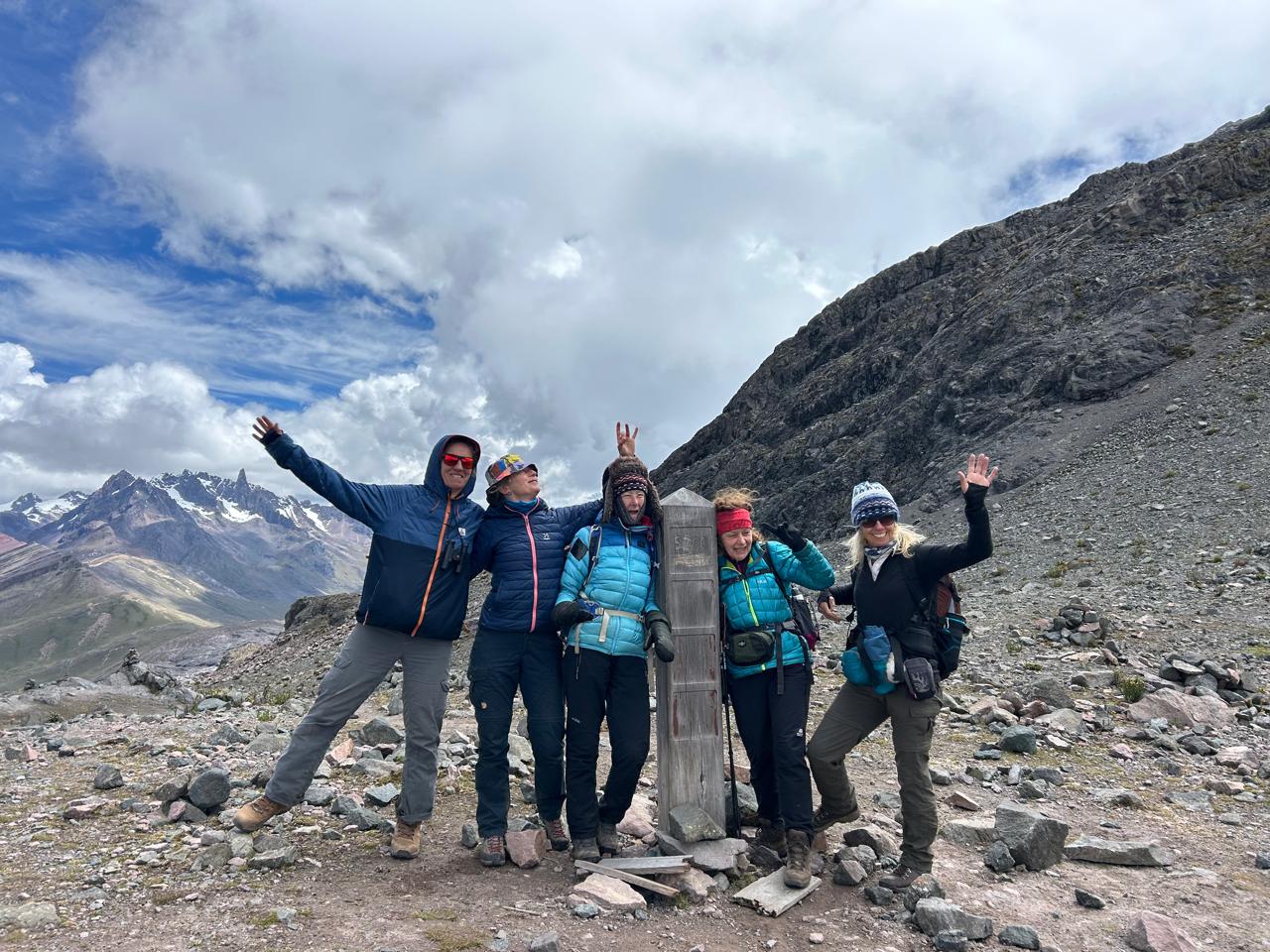
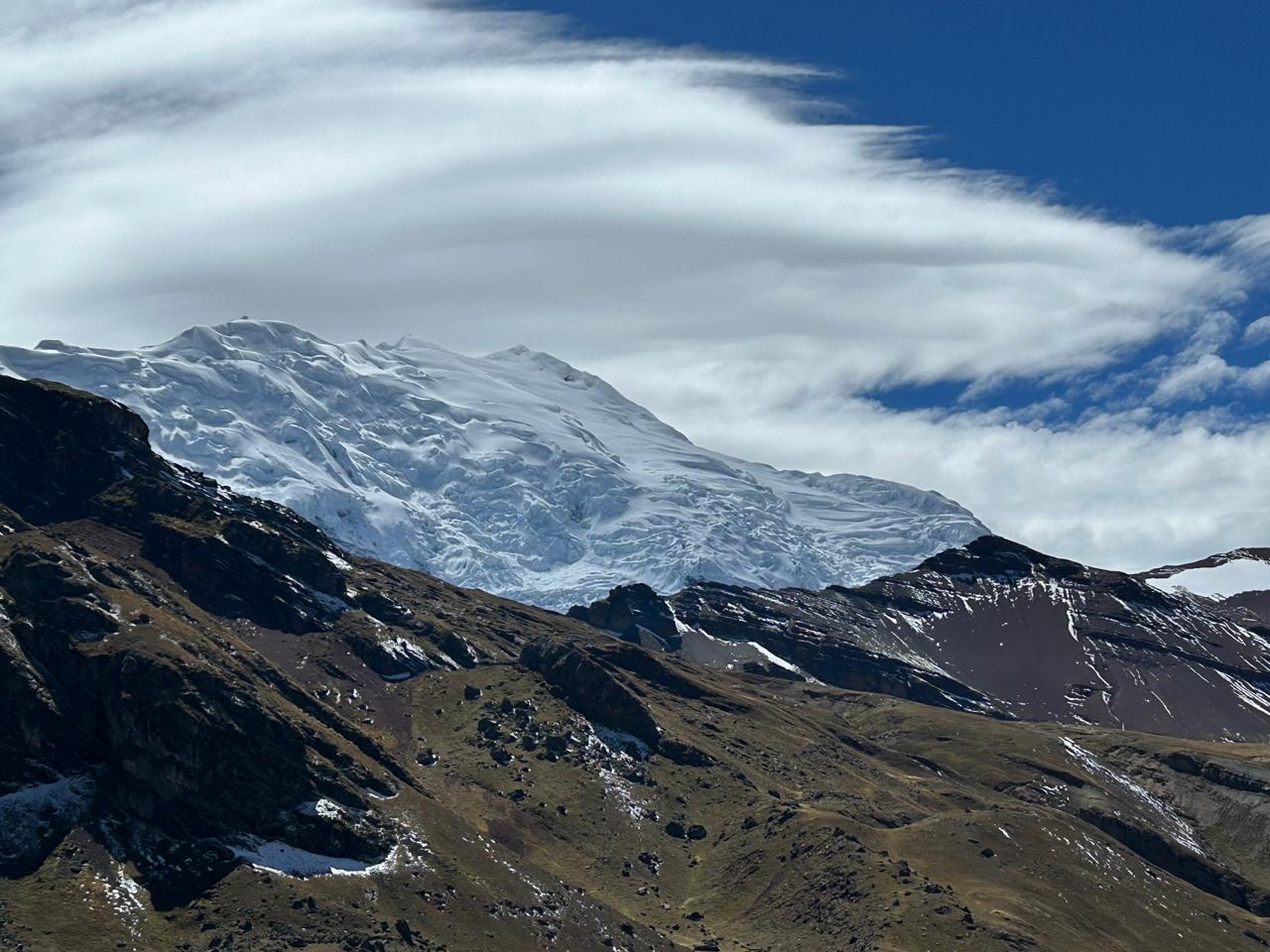
Trekking the Ausangate Circuit is widely recognized as one of the most rewarding high-altitude adventures in South America. Circling the sacred Apu Ausangate, the highest peak in the Cusco region at 20,945 feet (6,384 meters), this off-the-beaten-path trail takes you past turquoise glacial lakes, soaring Andean passes, alpaca-grazing valleys, and indigenous Quechua communities before ending at the world-famous Rainbow Mountain (Vinicunca). Unlike standard day trips, this Ausangate Trek 5 day / 4 night allows you to experience the high Andes at an unhurried, authentic pace, beating the tourist crowds to Rainbow Mountain and camping beneath pristine, light-pollution-free night skies.
Ausangate trek 5 Days
AUSANGATE TREK 5-DAY ITINERARY
Cusco – Tinke – Pacchanta & Natural Hot Springs
Your journey begins with a 06:30 AM pickup from your hotel in Cusco for a scenic 3-hour drive through the Southern Valley toward the Andean village of Tinke. After a brief stop to pick up last-minute snacks and supplies, we continue to Pacchanta, where our team of local horsemen (arrieros) and pack horses await.
We begin our initial 3.5-hour trek through rolling Andean pastures dotted with grazing llamas and alpacas. Upon reaching our high-altitude campsite, our chef serves a warm, home-cooked lunch. Spend the afternoon relaxing, acclimatizing, and soaking in the natural thermal hot springs of Pacchanta directly under the glaciated peak of Mt. Ausangate.
- Hiking Distance: 4 miles (7 km)
- Campsite Elevation: 12,959 ft (3,950 m)
- Difficulty: Moderate / Acclimatization Day
- Meals Included: Lunch, Dinner & Trail Snacks
Pacchanta – 7 Lakes – Khampa Pass – Soraqocho
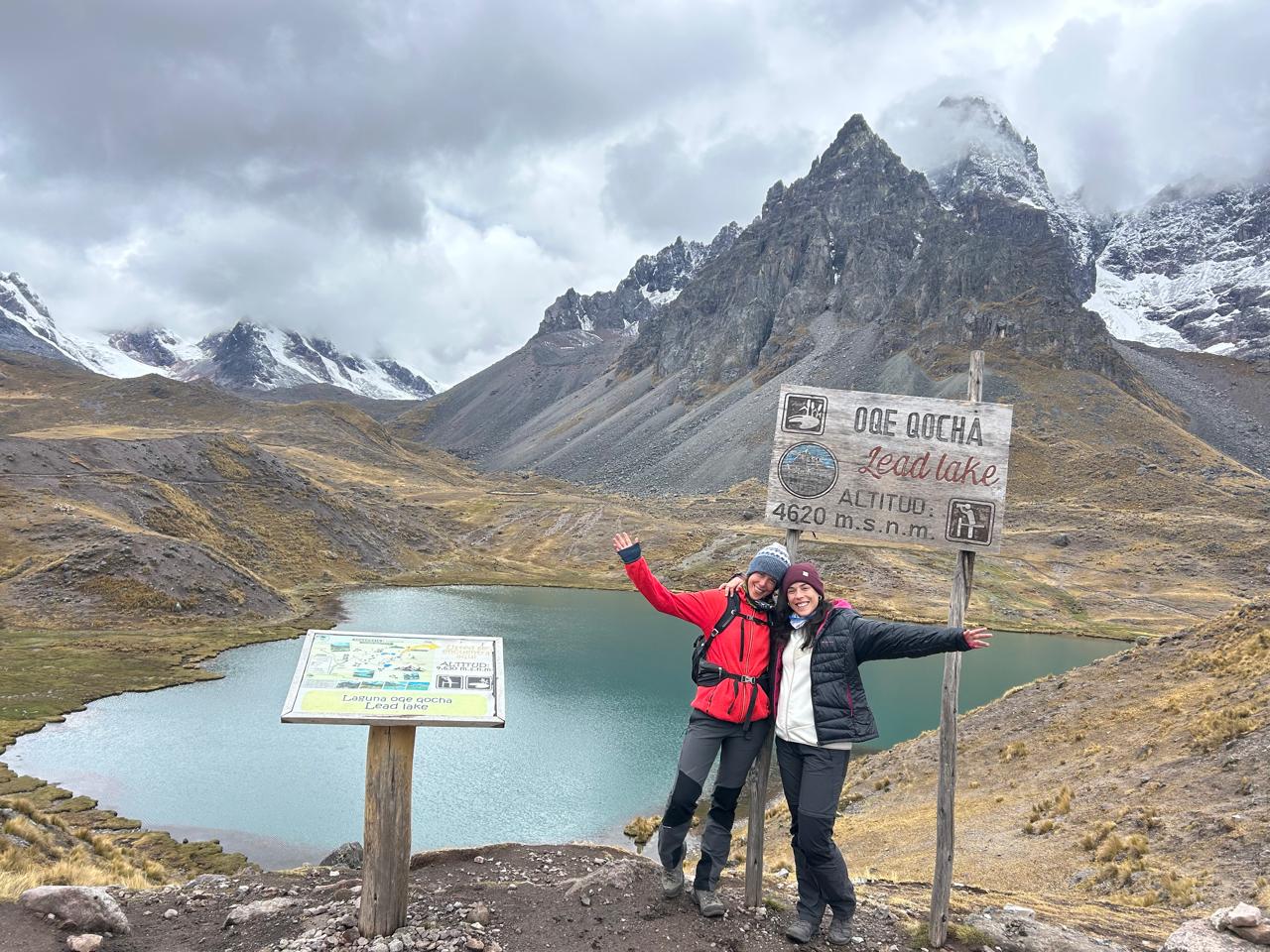
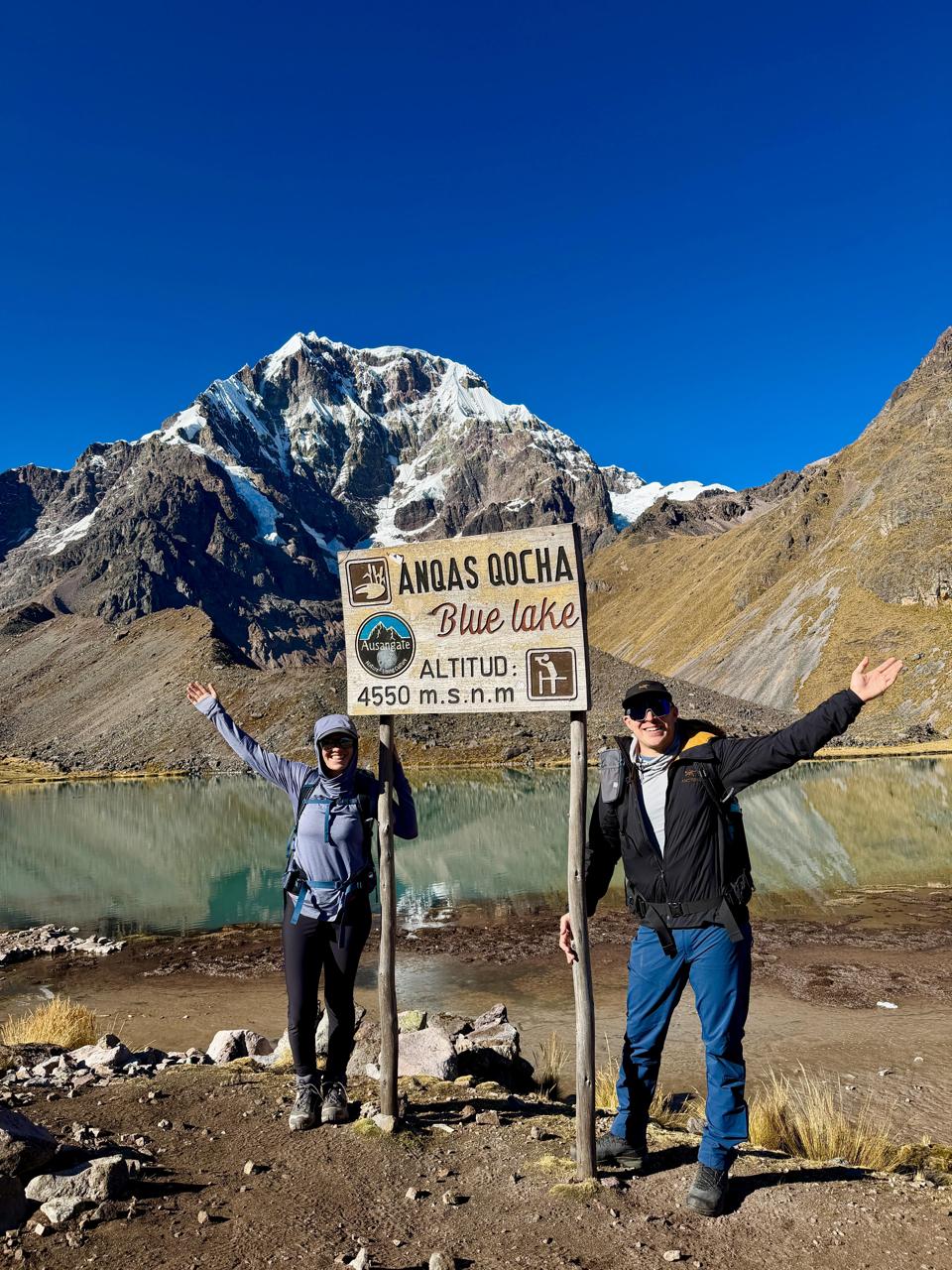
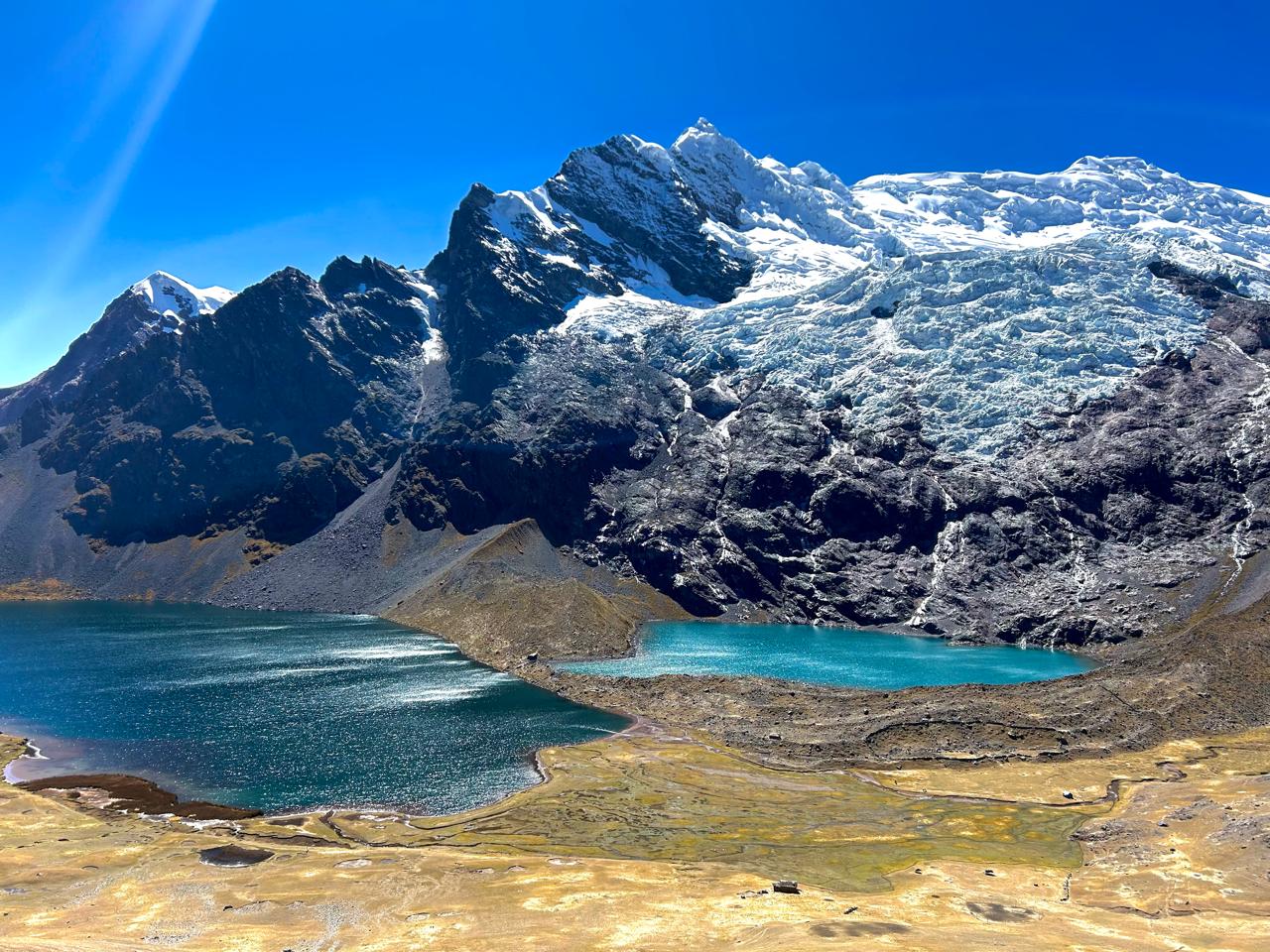
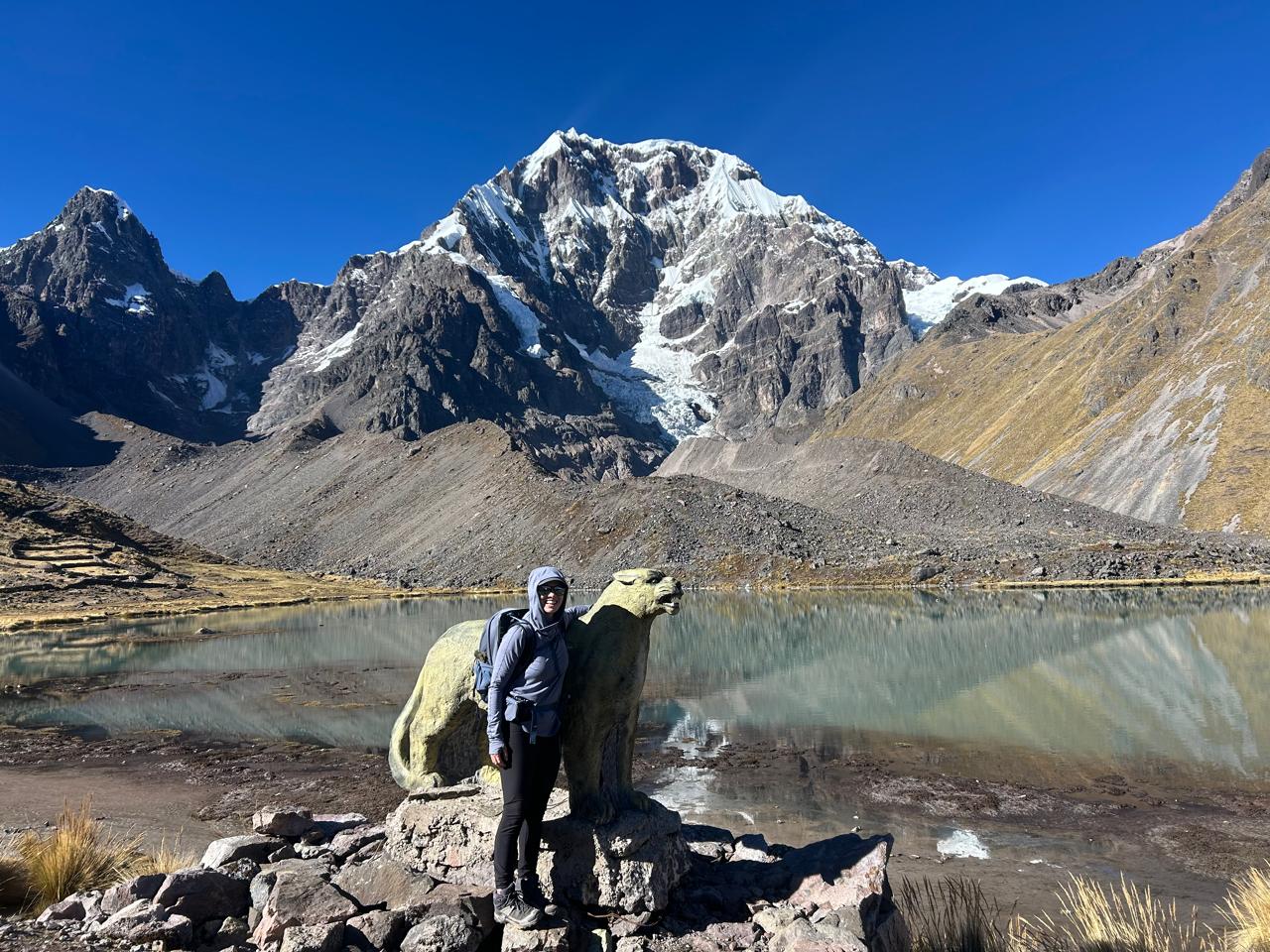
Following a hearty mountain breakfast, we trek along ancient trail networks winding through the famed 7 Ausangate Lakes (7 Lagunas de Ausangate). We take ample time to photograph these vibrant turquoise and emerald glacial mirrors reflecting the surrounding glaciers.
After lunch on the trail, we tackle our first major alpine challenge: climbing to Khampa Pass at 16,404 feet (5,100 meters). Reaching the pass rewards you with dramatic panoramic views of the Vilcanota Range. A 3-hour descent brings us to our secluded campsite at Soraqocho, tucked inside a narrow mountain valley.
- Hiking Distance: 10 miles (16 km)
- Campsite Elevation: 14,319 ft (4,300 m)
- Highest Point: 16,404 ft (5,100 m) at Khampa Pass
- Difficulty: Challenging
- Meals Included: Breakfast, Lunch, Dinner & Snacks
Soraqocho – Palomani Pass – Ausangate Cocha
Today features the highest geographic point of the entire trek: Palomani Pass at 16,732 feet (5,100 meters). We begin with an early steady ascent up a narrow alpine valley. Keep an eye out for high-Andean wildlife, including wild chinchillas (vizcachas), Andean geese, and giant Andean condors soaring overhead.
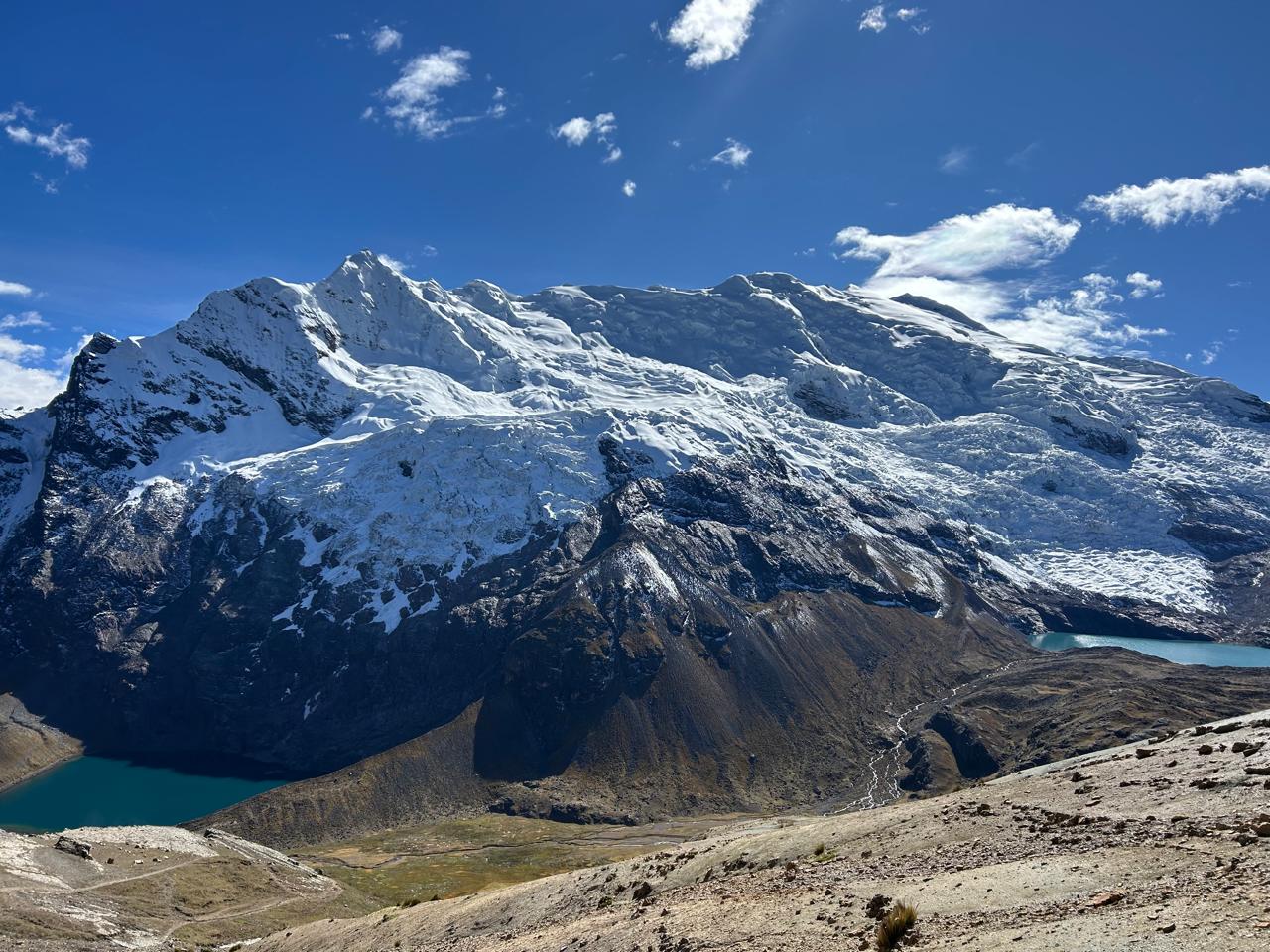
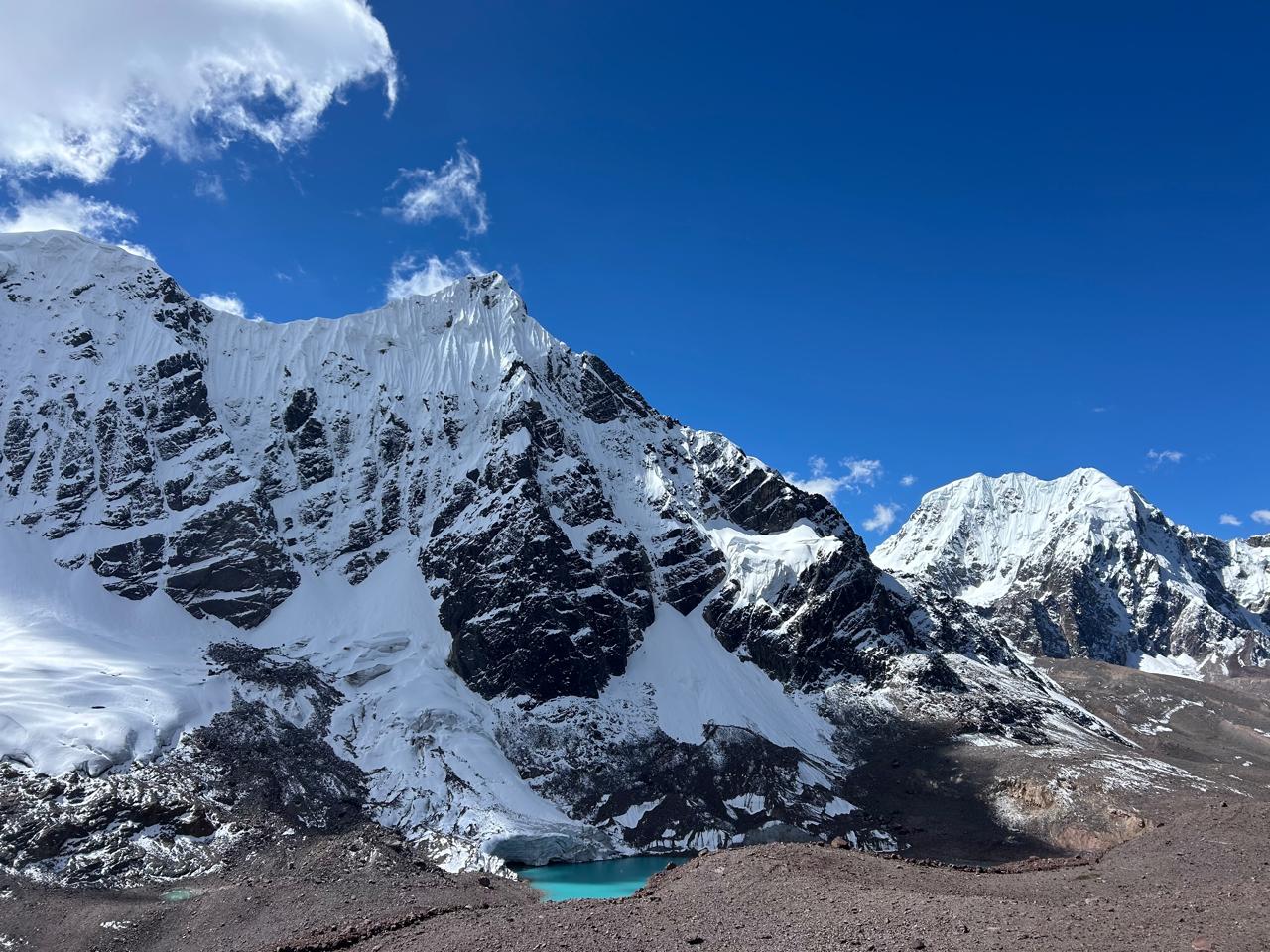
Crossing Palomani Pass provides sweeping, unobstructed views of Mt. Ausangate’s glaciated South Face. From the summit, a steep 2-hour descent leads past vibrant mineral lakes to our high camp at Ausangate Cocha, positioned directly at the base of the sacred mountain.
- Hiking Distance: 10.5 miles (17 km)
- Campsite Elevation: 15,091 ft (4,600 m)
- Highest Point: 17,000 ft (5,200 m) at Palomani Pass
- Trekking Time: 7 to 8 hours
- Difficulty: Strenuous
- Meals Included: Breakfast, Lunch, Dinner & Snacks
Ausangate Cocha – Pucacocha Pass – Ananta
Day 4 delivers some of the most colorful geological scenery in Peru. We cross Pucacocha Pass at 16,570 feet (5,051 meters), where multi-colored sandstone formations and five deep-hued glacial lakes open up before you.
The trail winds past traditional pastoral communities where local Quechua families tend herds of alpacas using age-old ancestral techniques. We finish the day’s trek early at our Ananta campsite, allowing plenty of time to eat a nourishing lunch, hydrate, and rest before our early summit attempt the following morning.
- Hiking Distance: 8.7 miles (14 km)
- Campsite Elevation: 15,091 ft (4,600 m)
- Highest Point: 16,570 ft (5,051 m) at Pucacocha Pass
- Trekking Time: 7 hours
- Difficulty: Moderate to Challenging
- Meals Included: Breakfast, lunch, dinner & snacks
Ananta – Rainbow Mountain (Vinicunca) – Cusco
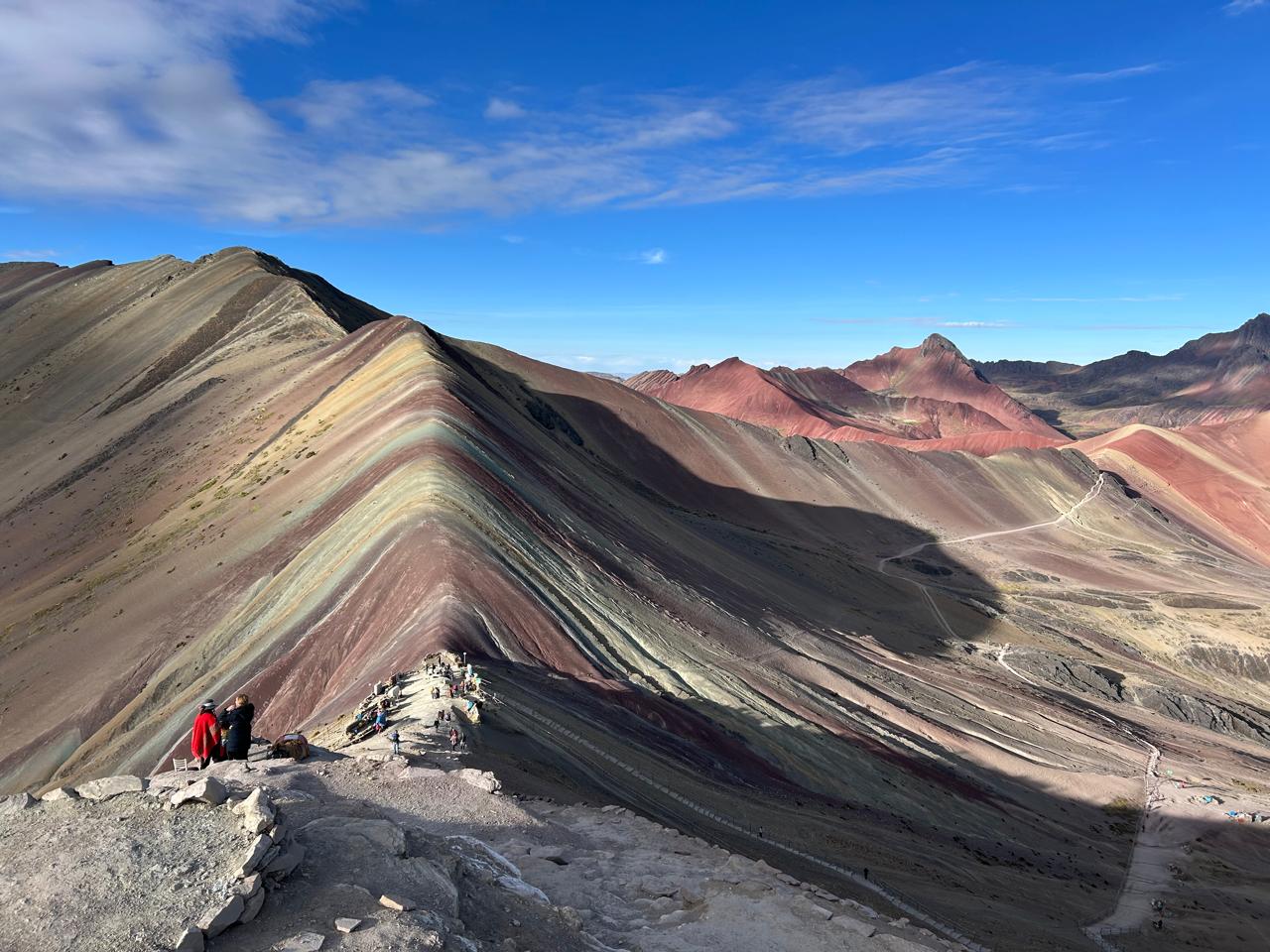
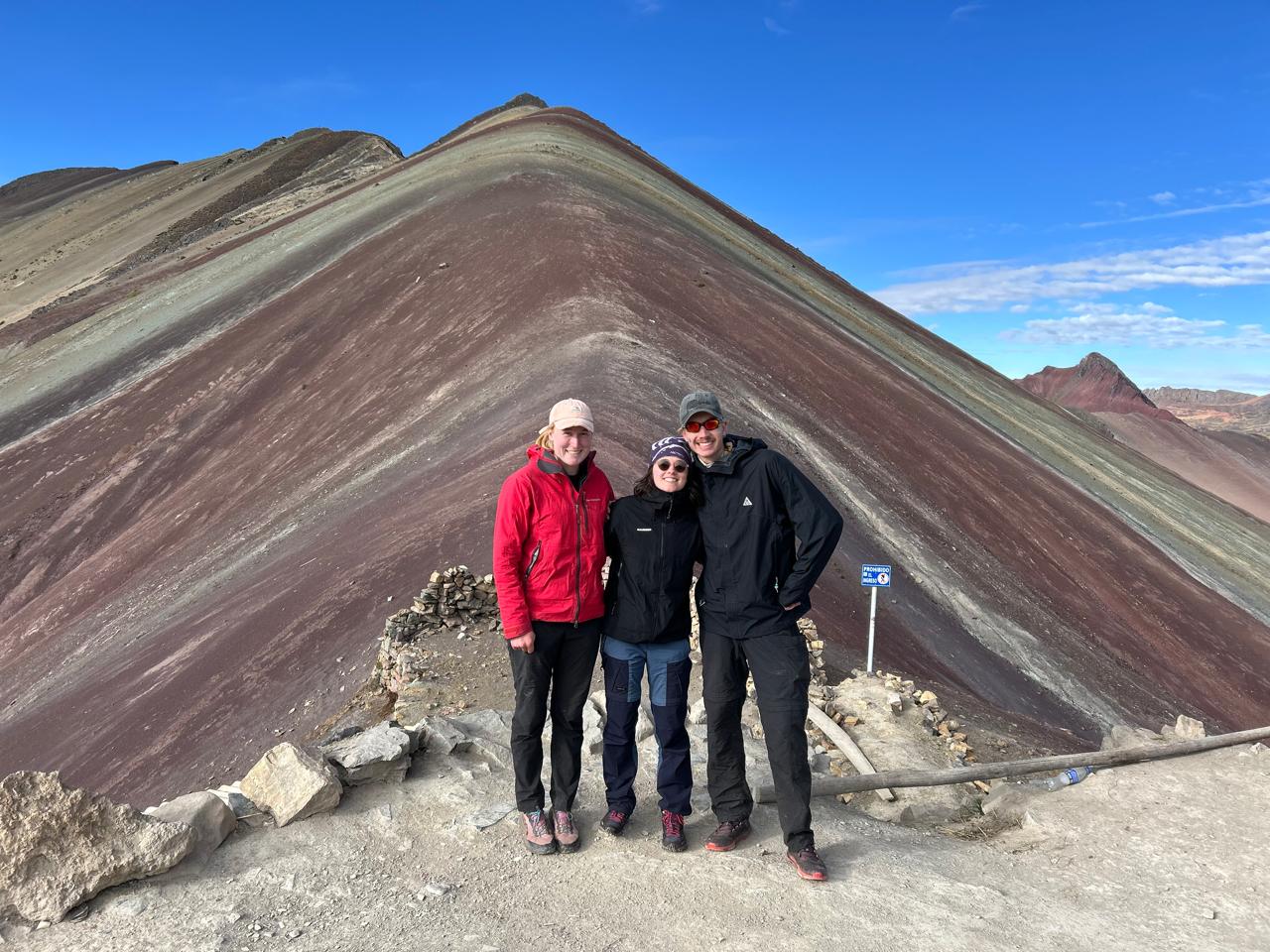
We wake up early at 05:00 AM for breakfast to reach Rainbow Mountain (Vinicunca) hours before the daily tour buses arrive from Cusco. Crossing Ananta Pass, we reach the ridge of Rainbow Mountain at 16,520 feet (5,035 meters) in quiet, peaceful morning light.
Your expert guide will explain the unique mineral composition that creates the red, gold, turquoise, and lavender stripes across the mountain face. After capturing uncrowded photographs and absorbing the views of the Red Valley, we descend to our vehicle rendezvous for a celebration lunch before taking our private transfer back to your hotel in Cusco.
- Hiking Distance: 6.2 miles (10 km round-trip)
- Elevation Range: 14,600 ft (4,460 m) to 16,520 ft (5,035 m)
- Trekking Time: 5 hours
- Difficulty: Challenging
- Meals Included: Breakfast & Celebration Lunch
What’s Included / Not Included
Included
- Pre-departure Briefing: You’ll have an orientation meeting with your guide the evening before the tour. The meeting, depending on the itinerary, is in your hotel.
- Private Transport: Private door-to-door transportation from your Cusco hotel to trailhead and return.
- Guide (fluent in English, Spanish, and native Quechua).
- Private mountain chef & all meals: Freshly cooked, high-energy gourmet mountain meals prepared daily by your personal trekking chef (accommodating vegetarian, vegan, and special dietary needs).
- Camping gear: Professional 4-season high-altitude tents (2 persons per 3-person tent), insulated sleeping mats, and a dining tent with tables and chairs.
- Sleeping setup: Insulated foam sleeping mats and comfortable foam mattresses for a warm night’s rest.
- Private bathroom tent: Private toilet tent set up exclusively for your group at every campsite.
- Pack animals & porters: Horsemen (arrieros) and pack horses to carry all collective camping gear and up to 7 kg / 15 lb of your personal duffel bag luggage.
- Emergency satellite communication: Modern satellite devices for continuous high-altitude emergency coverage and real-time communication.
- Safety equipment & emergency horse: Backup riding horse (horse support) available on high-altitude passes, complete first-aid kit, pulse oximeter, and emergency medical oxygen tanks.
- Permits & fees: All community entry tickets for the Ausangate Circuit, 7 Lakes, Pacchanta Hot Springs, and Rainbow Mountain.
Not Included
- Personal trekking gear: Sleeping bags (rated to 14°F / -10°C recommended) and trekking poles (both available for rent upon request).
- Emergency horse: Backup riding horse (horse support) on high-altitude passes (available for rent upon request).
- Select meals: Day 5 (after returning to Cusco).
Ausangate & Rainbow Mountain Travel Information
Planning for an expedition through Mt. Ausangate requires clear expectations and proper preparation. Below is everything you need to know about high-altitude safety, packing policies, booking logistics, and trail conditions for your upcoming trek with Casa Cóndor Ausangate.
Ausangate, Rainbow Mountain Days Packing List
These are the most important items for high-altitude hiking, cold camps, and Ausangate.
Original passport, Peruvian soles cash, good-quality daypack, water bottle, power bank, lip balm, and sunscreen.
What to Wear
Dress in layers. Mornings and nights in Ausangate can be very cold, while hiking under direct sun can feel warm. Choose breathable clothing that is easy to add or remove.
High-top hiking boots, hiking crew socks, thermal base layers, quick-dry hiking pants/trousers, and fleece.
What to put in the daypack
Carry everything you will need during the hiking day because you will not have access to your duffle until camp.
Waterproof and windproof jacket, sun hat or cap with neck cover, sunglasses, beanie or chullo, gloves, buff or bandana, headlamp, insect repellent, camera + extra batteries, snacks, trekking poles
What to Put in the Duffle Bag
Use the duffle for overnight clothing, toiletries, warm camp layers, and personal equipment. Keep it within the 7 kg / 15 lb limit so the horse support team can work safely and responsibly.
Sport pants, warm down jacket, toiletries, sleeping bag, mattress
Optional Rentals
Sleeping bags, inflatable mattresses, and trekking poles can be rented in advance for an additional fee.
Final tip: Pack light. A well-organized duffle and comfortable daypack will make the high-altitude trekking days much easier.
Private & small group.
At Casa Cóndor Ausangate, we intentionally keep our group sizes small, capped between 2 and 8 travelers. Unlike large commercial tour operators that rush past the scenery, our small-group format ensures personalized attention, a comfortable pace, and a genuine connection with nature and indigenous Quechua culture. Whether you are traveling as a couple, a family, or a group of friends, you will have the space to soak in the mountain views without feeling pushed along.
Duffel Bag
During your pre-trek orientation session in Cusco, we will provide you with a durable canvas duffel bag. Our pack horses and local horsemen (arrieros) will transport these duffel bags between campsites each day. Weight exactly 15 lbs (7 kg) per traveler. During the day, you will only carry a lightweight daypack containing your drinking water, rain gear, warm layers, sun protection, camera, snacks, passport, and daily medications.
Hotel Pickup
We provide door-to-door transportation pickup within Cusco city limits on Day 1. Your guide or driver will confirm your exact pickup window during the pre-trek orientation session (pickup times may vary by 30 to 45 minutes depending on morning traffic conditions). Historic Cusco features narrow, cobblestone streets, long staircases, and steep pedestrian alleyways where vehicles cannot drive. To ensure a smooth morning checkout and avoid carrying heavy luggage up steep hills, we strongly recommend booking an accessible hotel in or near the Historic Center with direct vehicle access.
High-Altitude Acclimatization
This trek takes place entirely at extreme elevations. You will hike consistently above 13,120 ft (4,000 m), cross mountain passes reaching up to 17,000 ft (5,200 m), and visit Rainbow Mountain (Vinicunca) at approximately 16,522 ft (5,036 m). Pre-Trek Stay: Spend at least 2 to 3 full days in Cusco (11,152 ft / 3,400 m) or the Sacred Valley prior to your start date. Drink plenty of water, eat light meals, get ample rest, and limit alcohol consumption before setting out. If you experience headaches, nausea, dizziness, extreme fatigue, confusion, or shortness of breath, inform your guide immediately.
Preparation
This trek is rated challenging to advanced. While it does not require technical rock climbing, you should be comfortable hiking 6 to 8 hours per day over steep, uneven terrain at extreme high altitude while sleeping in freezing campsite conditions.
Weather, Seasons
Mountain weather around Mt. Ausangate is notoriously unpredictable. Within a single day, you may experience intense high-altitude sunshine, freezing winds, rain, snow, and below-freezing nighttime temperatures. Dry Season (Recommended): April–October. Clear blue skies, lower rainfall, and crisp views, but freezing campsite nights (often dropping below 20°F / -6°C). Wet season November–March: rain, mud, cloud cover, and greener landscapes. Route adjustments may be necessary depending on trail safety. Tip: Layering is essential. Pack high-quality thermal base layers, a fleece mid-layer, a heavy down jacket, and a windproof/waterproof outer shell year-round.
Campsite Amenities, Meals & Food
We provide a premium, full-service camping experience across all 4 nights on the trail:
Camp Equipment: Spacious 4-season tents, comfortable sleeping pads, heavy fleece blankets, dining tents, tables, and full cookware.
Private Bathroom Tent: Every campsite features a private, toilet tent set up exclusively for our group.
Gourmet Mountain Dining: Our professional trekking chef prepares fresh, hot meals three times daily. Safe, boiled drinking water is provided at every meal and camp stop.
Dietary Needs: We gladly accommodate vegetarian, vegan, gluten-free, and special allergy requests with advance notice.
Rainbow Mountain
Rainbow Mountain sits at 16,522 ft (5,036 m) in the Vilcanota range. Its famous multi-colored striations are formed by natural mineral deposits. Visits to Rainbow Mountain are scheduled for the final day of the trek, provided that local community access permits, trail conditions, and weather allow for a safe visit.
Responsible travel
The Ausangate region is a remote wilderness with limited or no cellular service. Our team carries complete safety equipment on every trip, including a comprehensive first-aid kit, emergency medical oxygen, and satellite communication devices. The area is home to traditional Quechua-speaking alpaca herding communities with deep cultural ties to the sacred mountain (Apu Ausangate). We ask all guests to practice respectful, low-impact tourism.
Frequently Asked Questions—Ausangate Trek 5 Days.
How difficult is the 5-Day Ausangate Trek?
The 5-day Ausangate Trek is rated as challenging to strenuous. Hikers cover roughly 43 miles (70 km) while staying consistently above 14,000 feet (4,200 m) in elevation and crossing mountain passes higher than 16,000 feet. Excellent physical conditioning, strong cardiovascular endurance, and prior high-altitude experience are highly recommended.
What is the highest point on the 5-Day Ausangate Trek?
The highest point on the 5-day circuit is the dramatic Palomani Pass, sitting at 17,060 feet (5,200 meters) above sea level. Reaching this pass rewards trekkers with breathtaking, close-up panoramic views of Mount Ausangate’s massive glaciers and surrounding turquoise lakes.
How does the Ausangate Trek compare to the Inca Trail?
Unlike the heavily regulated Inca Trail, the Ausangate Trek focuses on raw wilderness, towering glaciers, alpine lakes, and complete solitude. There are no ancient Inca ruins along the trail, but there are also zero tourist crowds. It does not require strict government permits months in advance, making it ideal for hikers seeking off-the-beaten-path mountain adventure.
Do I need permits for the 5-Day Ausangate Trek?
No, there is no official government permit quota system for Ausangate like there is for the Inca Trail. However, local Quechua indigenous communities collect small trail-use and conservation fees along the route. When you book with Casa Condor Ausangate, all community entrance fees are 100% included in your package.
How many days should I acclimate in Cusco before the Ausangate Trek?
We strongly recommend spending at least 2 to 3 full days in Cusco (11,152 ft / 3,399 m) or the Sacred Valley before embarking on the 5-day trek. Hydrate aggressively, avoid alcohol during your first days, and consider taking a day hike like the 7 Lakes or Sacred Valley ruins to help your body adapt safely.
Does the 5-Day Ausangate Trek include Rainbow Mountain?
Yes. Our signature 5-day Ausangate route seamlessly combines the wilderness glacial circuit with Rainbow Mountain (Vinicunca). You will approach Rainbow Mountain from the quiet back country, allowing you to reach the summit early in the morning before thousands of day-tour buses arrive from Cusco.
What are the sleeping and bathroom arrangements on the trek?
Depending on your chosen itinerary, you will sleep in high-end 4-season mountain tents or authentic local lodges like Casa Cóndor Ausangate. We supply comfortable sleeping pads, warm dining tents with heaters, private eco-friendly toilet tents, and warm water basins every morning for washing.
What should I pack for freezing nights on the Ausangate Trek?
Nighttime temperatures in the high Andes regularly drop below freezing (15°F to 25°F / -9°C to -4°C). Essential cold-weather gear includes a 0°F-rated down sleeping bag, thermal Merino wool base layers, a heavy down jacket, windproof outer shells, thermal gloves, a beanie, and broken-in waterproof trekking boots.
Is emergency oxygen provided during the 5-day trek?
Yes, absolute safety is our top priority. Every Casa Condor Ausangate trek is equipped with emergency medical oxygen, a comprehensive wilderness first-aid kit, satellite communication, and an emergency horse trained to evacuate injured or altitude-sick hikers if necessary.
What is the best month to hike the 5-Day Ausangate Trek?
The premier time for the 5-day Ausangate Trek is during the Andean dry season, which runs from May through October. During these months, you can expect stable weather, sunny daytime skies, and crisp photography conditions, though nighttime temperatures drop significantly.
Other Recommended Tours
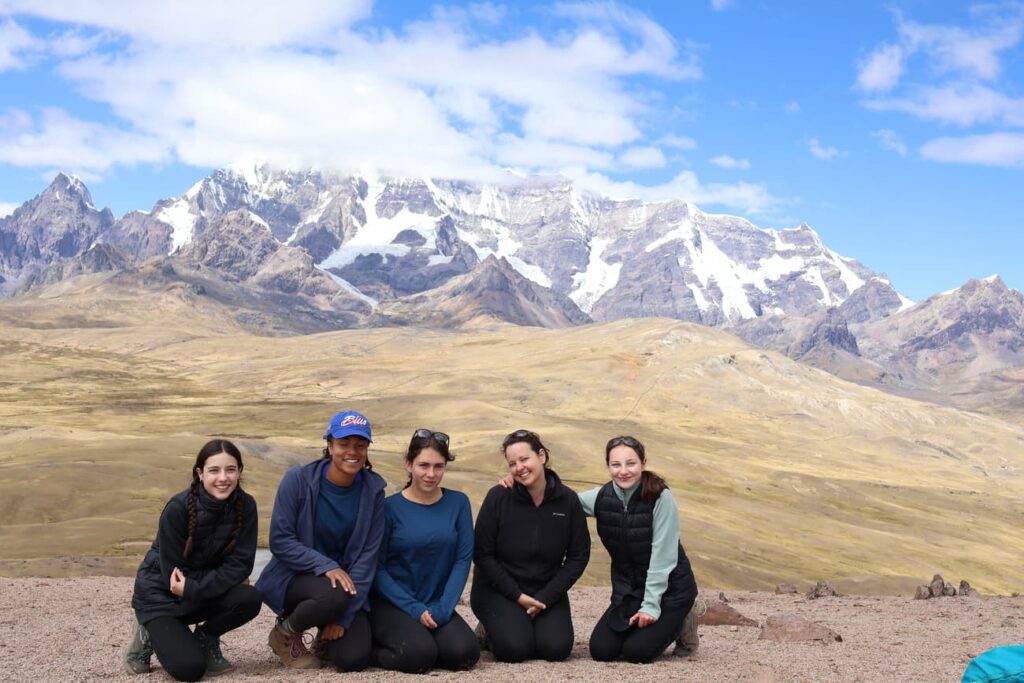
Ausangate Trek 4 days
Ausangate Trek 4 days Discover the Ausangate Trek 4 days, a breathtaking high-alpine journey past soaring glaciated peaks, vibrant turquoise lakes, and traditional Quechua…
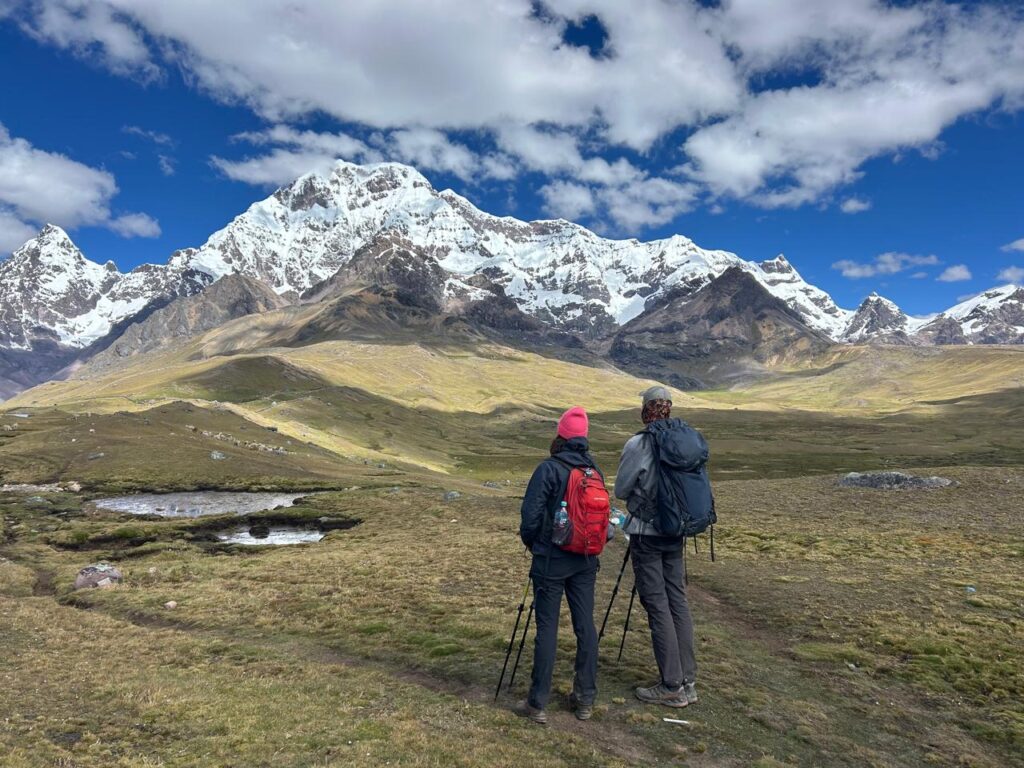
Ausangate trek 3 days
Experience the raw, pristine beauty of the Peruvian Andes on our 3-Day Ausangate Trek, an immersive high-mountain expedition designed for adventurous travelers seeking breathtaking…
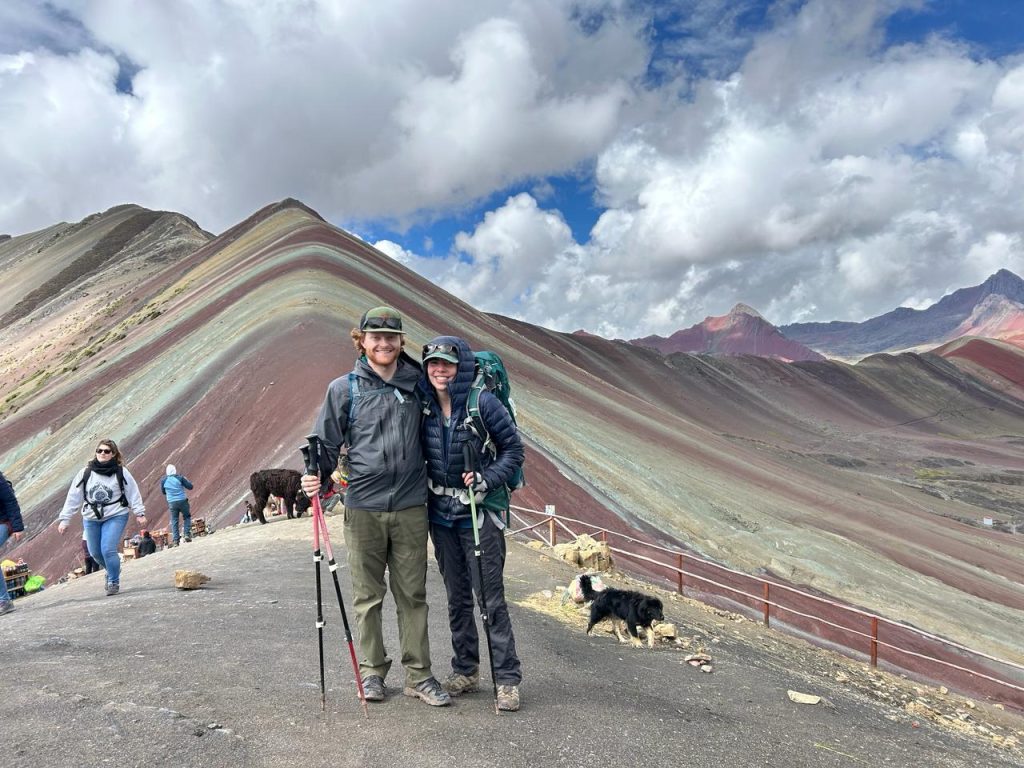
2-Day Rainbow Mountain & 7 Lakes of Ausangate Tour
2-Day Rainbow Mountain and 7 Lakes of Ausangate Tour from Cusco Discover two of Peru’s most spectacular natural wonders on an unforgettable 2-day, 1-night…
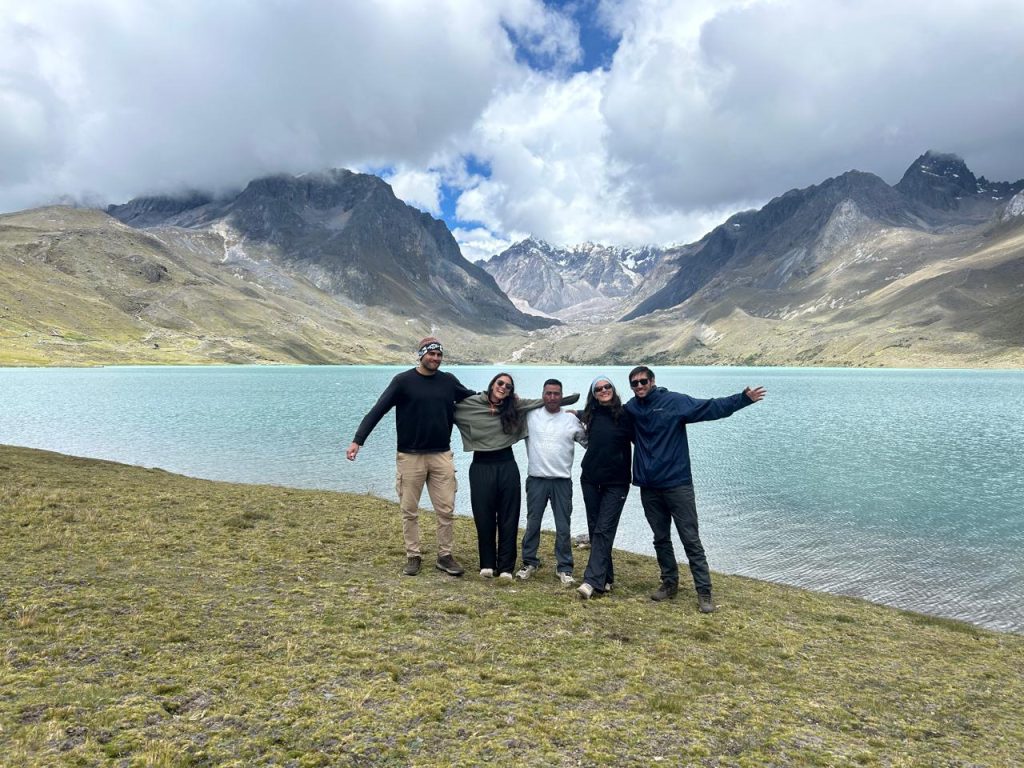
2-Day Singrenacocha Lake tour with lodge stay
Singrenacocha Lake with accommodation If you want to experience one of Peru’s most breathtaking, untouched turquoise lakes without fighting off crowds of tourists, Singrenacocha…

7 Lakes of Ausangate tour with lodge stay
Ausangate 7 lakes 2-day overnight lodge Discover the spectacular 7 Lakes of Ausangate, Peru, on a 2-day, 1-night adventure combining high-altitude trekking, glacial landscapes,…